
Baked Chicken Tenders
If you have ever pulled a tray of “oven-fried” chicken out of the oven only to find soggy breading and dry meat, you are not alone. For years, I believed that truly crispy chicken tenders needed a pot of bubbling oil. Then I started testing, and testing, and testing again. The result is this recipe for baked chicken tenders that come out golden, crunchy on the outside, and tender and juicy on the inside, with no deep frying and almost no mess.

These tenders use a simple three-step breading station, a seasoned panko and Parmesan coating, and one small trick (toasting the crumbs before they ever touch the chicken) that makes the crust brown beautifully in the oven. They are ready in about 35 minutes, they are easy enough for a Tuesday night, and they are good enough to serve at a game-day party.
Kids love them. Adults love them. And because they are baked, you get all that crunch with a lot less oil and a lot less cleanup.
Baked Chicken Tenders
Ingredients
Equipment
Method
- Preheat oven to 425°F (220°C). Set a greased wire rack on a rimmed baking sheet.
- Toast panko with olive oil in a dry skillet 3-4 minutes until golden; cool 2 minutes.
- Stir Parmesan, onion powder, cayenne into cooled panko.
- Whisk flour with garlic powder and paprika; whisk eggs and milk separately.
- Pat chicken dry; season with salt and pepper.
- Dredge in flour, dip in egg, press into panko.
- Arrange on rack; spray tops lightly.
- Bake 18-22 minutes, flipping once, until golden and 165°F internally.
- Rest 3 minutes; serve with dips and lemon wedges.
Notes
Why You’ll Love This Recipe
- Truly crispy without frying. A wire rack, high heat, and pre-toasted panko give you a crust that stays crunchy.
- Juicy, never dry. A quick egg and milk dip keeps the chicken moist, and the short bake time prevents overcooking.
- Simple pantry ingredients. You probably have everything in your kitchen already.
- Family-friendly. Mild by default, with an easy spicy option for adults.
- Great for meal prep. They freeze and reheat well (details below).
- Lighter than fast food. You control the oil, the salt, and the quality of the chicken.

How to Bake Chicken Tenders (Step-by-Step Guide)
Even a simple recipe has small details that decide whether you get great tenders or just okay ones. Here is exactly how to bake chicken tenders so they turn out right every time.
Step 1: Start with the Right Chicken
You can use packaged chicken tenderloins, which are the small strips of meat from beneath the breast, or slice your own from boneless, skinless chicken breasts. If you are slicing, cut against the grain into strips about 1 inch wide and ½ inch thick. Try to keep the pieces a similar size so they cook evenly.
If your breasts are very thick, slice them in half horizontally first, then cut into strips. Thick pieces stay raw in the center while the outside over-browns.
Step 2: Dry the Chicken Thoroughly
Moisture is the enemy of crispy breading. Pat each strip dry with paper towels before seasoning. Wet chicken makes the flour clump and the breading slide off during baking.
Step 3: Toast the Panko
This is the secret step. Baked breading does not sit in hot oil the way fried breading does, so it never gets the chance to brown. Toasting the panko in a skillet with a little olive oil for a few minutes gives it a head start. The crumbs soak up just enough fat to brown, and the finished tenders look and taste like they were fried.
Watch the pan closely. Panko goes from golden to burnt very fast.
Step 4: Set Up Your Breading Station
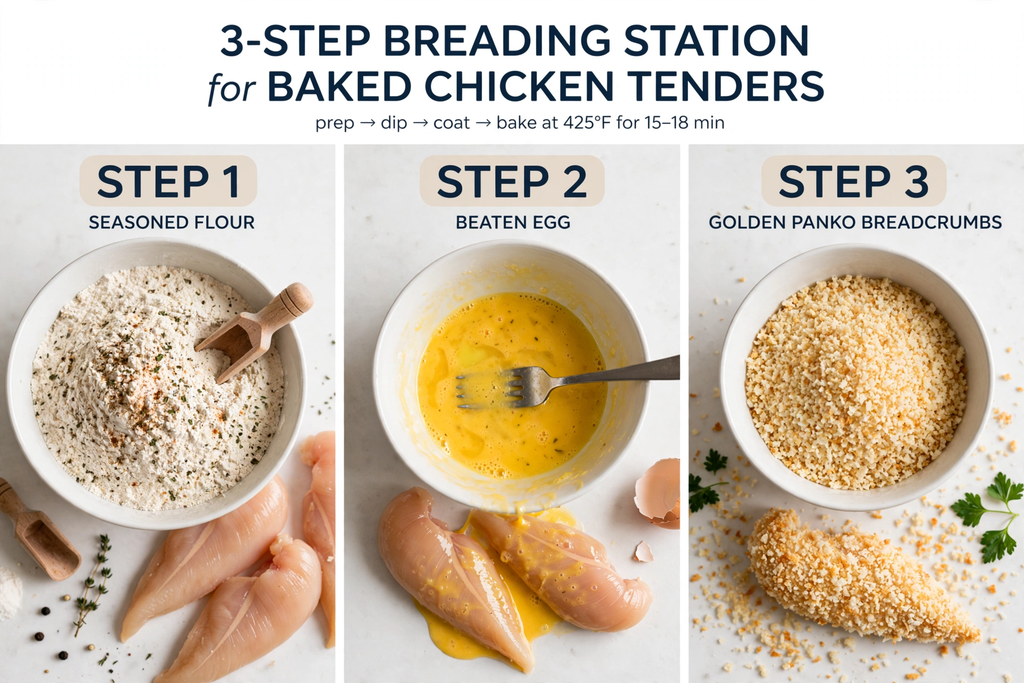
Use three shallow dishes in a row: seasoned flour, egg wash, and panko-Parmesan. Keep one hand for dry ingredients and the other for wet. This “dry hand, wet hand” method prevents thick, clumpy fingers and keeps the coating even.
Step 5: Bread with Pressure
After dipping in egg, lay the tender in the panko and press down firmly with your palm. Flip and press again. Pressing helps the crumbs stick so the coating stays on when you flip.
Step 6: Use a Wire Rack
Place the breaded tenders on a wire rack set over a baking sheet. Air flows around every side, so the bottoms stay as crisp as the tops. A light mist of cooking spray on the tops helps the crumbs brown evenly.
Step 7: Bake Hot and Fast
A 425°F oven cooks the tenders quickly so the crust crisps before the chicken dries out. Most batches take 18 to 22 minutes. Flip once halfway.
Step 8: Check the Temperature
The safest way to know the tenders are done is an instant-read thermometer. Chicken is cooked when the thickest part reaches 165°F (74°C). Pulling them out right at that mark keeps them juicy.
Step 9: Rest Before Serving
Give the tenders 3 minutes to rest. The juices settle, and the crust firms up as it cools slightly.
Ingredient Notes and Smart Substitutions
Chicken: Tenderloins cook fastest and stay the most tender. Chicken breast strips work well too. Boneless, skinless thighs are juicier but take a few more minutes.
Panko vs. regular breadcrumbs: Panko has larger, airier flakes that create a lighter, crunchier crust. Regular breadcrumbs make a denser coating. If using regular crumbs, reduce the amount by about ¼ cup.
Parmesan: Freshly grated Parmesan melts into the coating and adds savory depth. Pre-shredded cheese in a canister is drier and can work in a pinch, but fresh is better.
Milk or buttermilk: Buttermilk adds a slight tang and tenderizes the meat. Regular milk works perfectly fine.
Gluten-free option: Swap the flour for a 1-to-1 gluten-free blend and use gluten-free panko.
Dairy-free option: Skip the Parmesan, use unsweetened plant milk, and add 1 tablespoon of nutritional yeast to the panko for a cheesy flavor.
Egg-free option: Replace the egg wash with plain yogurt thinned with a splash of milk, or use Dijon mustard whisked with a little water.
Lower-carb option: Replace the panko with crushed pork rinds or almond flour mixed with Parmesan.
Common Mistakes to Avoid
Crowding the pan. Tenders placed too close together steam each other. Leave about an inch between pieces.
Skipping the rack. Without airflow, the bottoms turn pale and soft.
Overbaking. Dry chicken usually means the oven was too long or too low. High heat and a short bake keep the center juicy.
Using wet chicken. Always pat dry before breading.
Forgetting to season each layer. Salt the chicken, and add spices to both the flour and the panko. Seasoning only one layer leaves the final bite bland.
Not pressing the crumbs. Light dusting leaves bare patches. Press firmly.
Flavor Variations to Try
Spicy Buffalo Baked Chicken Tenders: Add 1 teaspoon cayenne to the flour and toss the baked tenders in 3 tablespoons of buffalo sauce mixed with 1 tablespoon melted butter.
Lemon Herb Chicken Tenders: Add the zest of one lemon, 1 teaspoon dried oregano, and 1 tablespoon chopped parsley to the panko.
Ranch Chicken Tenders: Stir 2 tablespoons of ranch seasoning mix into the panko.
Cornflake Crunch Tenders: Replace half the panko with crushed cornflakes for an extra-crunchy texture kids love.
Everything Bagel Tenders: Add 1 tablespoon of everything bagel seasoning to the panko.
Italian-Style Tenders: Add 1 teaspoon Italian seasoning and serve with warm marinara for dipping.
Best Dipping Sauces for Chicken Tenders
A great tender deserves a great sauce. Here are quick favorites:
- Honey mustard: Mix 3 tablespoons mayonnaise, 2 tablespoons Dijon mustard, and 1 tablespoon honey.
- Creamy ranch: Classic and always a crowd pleaser.
- Sweet and tangy BBQ: Pair with a smoky paprika version of the tenders.
- Sriracha mayo: Stir 2 tablespoons mayo with 1 teaspoon sriracha and a squeeze of lime.
- Garlic Parmesan dip: Blend Greek yogurt, grated Parmesan, minced garlic, and lemon juice.

What to Serve with Baked Chicken Tenders
These tenders pair well with both comfort-food sides and lighter options.
Classic sides:
- Oven-baked sweet potato fries
- Creamy mac and cheese
- Crispy roasted potatoes
- Corn on the cob
Lighter sides:
- Crisp green salad with lemon vinaigrette
- Roasted broccoli with garlic
- Cucumber and tomato salad
- Coleslaw
Make it a meal: Slice the tenders over a salad, tuck them into a wrap with lettuce and ranch, or stack them on a toasted bun for a chicken sandwich.
Air Fryer Method
Want even faster tenders? Preheat your air fryer to 400°F (200°C). Place the breaded tenders in a single layer, spray lightly with oil, and cook for 8 to 10 minutes, flipping halfway, until golden and cooked to 165°F (74°C). Work in batches so the basket is not crowded.
Make-Ahead, Storage, and Reheating
Make ahead: Bread the chicken up to 4 hours in advance and keep it refrigerated on a rack-lined tray, uncovered. Bake straight from the fridge, adding 2 to 3 minutes.
Refrigerating: Store cooled leftovers in an airtight container for up to 3 to 4 days.
Freezing (baked): Cool completely, freeze in a single layer on a tray for 1 hour, then transfer to a freezer bag. They keep for up to 3 months.
Freezing (unbaked): Freeze breaded raw tenders on a tray, then bag them. Bake from frozen at 425°F for 25 to 30 minutes, until they reach 165°F.
Reheating: Skip the microwave, which makes the crust soggy. Reheat on a wire rack in a 375°F (190°C) oven for 8 to 10 minutes, or in an air fryer at 350°F (175°C) for 4 to 5 minutes.
Baked Chicken Tenders Nutrition Overview
Baking instead of deep frying cuts a significant amount of added fat while keeping the protein high. Chicken breast is a lean source of protein, and the Parmesan and panko coating add flavor without needing heavy oil.
Estimated nutrition per serving (about 4 tenders, without dipping sauce):
| Nutrient | Amount |
|---|---|
| Calories | 345 |
| Protein | 39 g |
| Carbohydrates | 22 g |
| Fat | 11 g |
| Saturated fat | 3 g |
| Fiber | 1 g |
| Sugar | 1 g |
| Sodium | 640 mg |
| Cholesterol | 150 mg |
Nutrition values are estimates calculated from standard ingredient data and will vary by brand and portion size. Dipping sauces add extra calories, sugar, and sodium. This information is not a substitute for advice from a registered dietitian.
Ways to make them lighter: Use whole-wheat panko, reduce the oil used for toasting to 2 tablespoons, and serve with Greek yogurt-based dips.
Frequently Asked Questions (FAQs)
Most chicken tenders bake in 18 to 22 minutes at 425°F (220°C), flipped once halfway. Thicker strips may need a few extra minutes. Always confirm the internal temperature reaches 165°F (74°C).
Bake them on a wire rack so air circulates underneath, pat the chicken dry before breading, and don’t crowd the pan. Toasting the panko first also helps the crust stay crunchy.
Yes, flipping once halfway promotes even browning. If you use a wire rack, flipping is optional but still helpful for the crispiest result.
Absolutely. Slice boneless, skinless breasts into strips about 1 inch wide and ½ inch thick so they cook at the same pace as tenderloins.
Eggs act as the glue that holds the breadcrumbs on. If you cannot use eggs, thinned plain yogurt, mayonnaise, or Dijon mustard are good substitutes.
Yes. Regular breadcrumbs, crushed cornflakes, crushed crackers, or crushed pork rinds all work. Panko gives the lightest, crispiest texture.
The most common causes are wet chicken, skipping the flour step, or not pressing the crumbs firmly. Also avoid moving the tenders around too much while baking.
Final Thoughts
Crispy, juicy, and simple, these baked chicken tenders prove you do not need a deep fryer to enjoy a satisfying crunch. The pre-toasted panko, the hot oven, and the wire rack work together to deliver a golden crust every time, while the quick bake keeps the chicken tender inside.
Make a double batch and freeze half for busy nights. Your family will be asking for them again and again.
If you try this recipe, leave a star rating and a comment below. I would love to hear which dipping sauce you chose!