
Baked Chicken And Rice | The Easy One Pan Dinner Everyone Loves
Some dinners earn a permanent spot in your rotation because they ask almost nothing of you and give back far more than they should. Baked chicken and rice is one of them. You season the chicken, stir the rice with broth and aromatics, slide everything into the oven, and walk away. Forty-five minutes later you pull out a dish with crisp, golden chicken skin on top and rice underneath that has soaked up every drop of savory juice.
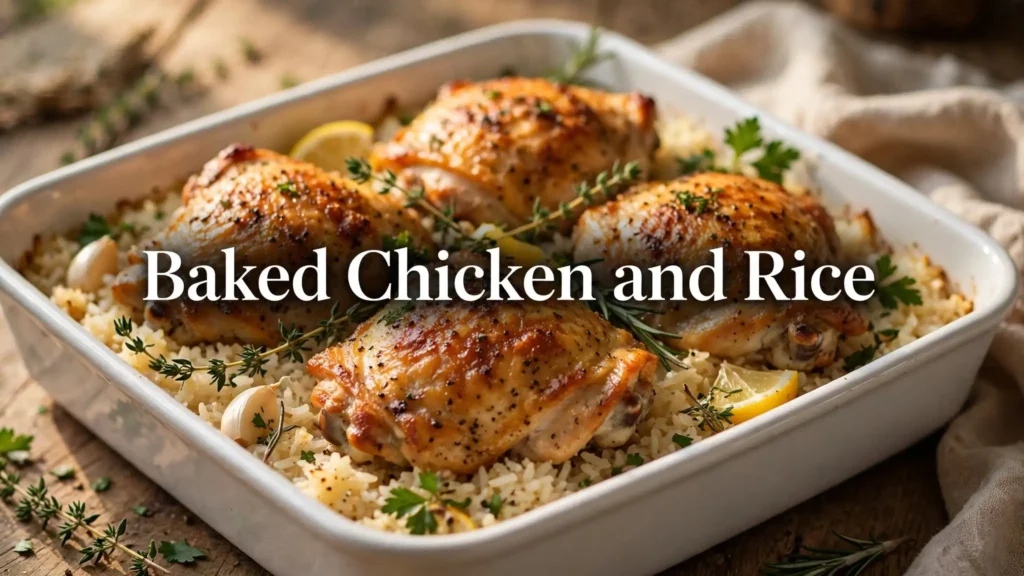
This guide gives you the full recipe, plus everything you need to make it work every time: which cut of chicken to buy, which rice behaves best in the oven, how to avoid the classic problems (mushy rice, crunchy rice, dry chicken), and plenty of variations. You’ll also find a nutrition overview, storage and meal-prep advice, and a detailed FAQ.
Baked Chicken and Rice
Ingredients
Equipment
Method
- Preheat oven to 400°F (200°C). Grease a 9×13-inch baking dish.
- Pat chicken thighs completely dry.
- Mix paprika, garlic powder, onion powder, thyme, pepper, and 3/4 teaspoon salt.
- Drizzle chicken with olive oil and melted butter; rub spice mix over both sides and under the skin.
- Add rice, onion, garlic, remaining 1/2 teaspoon salt to dish; spread evenly.
- Pour hot broth over rice; stir once.
- Place chicken skin side up on rice, pressing in slightly; keep skin above liquid.
- Cover tightly with foil; bake 40 minutes.
- Remove foil; scatter peas over rice. Bake uncovered 12-15 more minutes until golden and rice is tender.
- Rest 10 minutes covered loosely; fluff rice, sprinkle parsley, serve with lemon wedges.
Notes
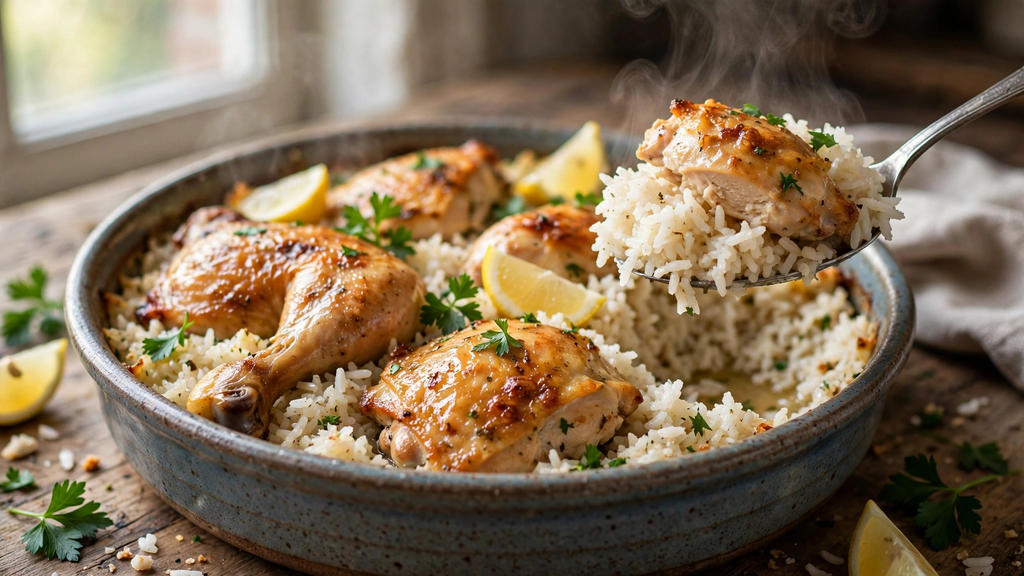
Why This Recipe Works
A lot of baked chicken and rice recipes fail for the same reason: they treat the rice as an afterthought. Here, the rice is the star of the base, and the chicken is what flavors it.
The chicken seasons the rice. As the thighs roast on top, their fat and juices drip down into the rice below. That’s free flavor, and it’s why this dish tastes like it was simmered with care rather than thrown together.
The ratio is calibrated for the oven. Stovetop rice usually uses about 2 cups of liquid per cup of rice. In the oven, with the dish sealed under foil, you need slightly less liquid because there’s little evaporation, but you also need extra time because heat reaches the rice more gently. Using 2¾ cups of broth for 1½ cups of rice (a ratio just under 2:1), plus the juices that render from the chicken, gives you tender, separate grains.
Two-stage cooking gives you two textures. Covered baking steams the rice and cooks the chicken through. Uncovered baking at the end crisps the skin and lets surface moisture evaporate.
Choosing the Best Chicken
The cut of chicken you pick makes the biggest difference to the final dish.
Bone-in, skin-on thighs (best choice). Thighs have more fat and connective tissue than breasts, so they stay juicy even if you cook them a few minutes too long. The bone helps the meat cook evenly, and the skin protects the meat while rendering its fat into the rice. This is the version I recommend and the one the recipe is written for.
Drumsticks. A close second. They behave like thighs and are often cheaper. Use 8 to 10 drumsticks and expect a similar bake time.
Boneless, skinless thighs. Works well and cooks faster. Reduce the total bake time slightly or add them to the dish after the rice has baked covered for 15 minutes. You’ll lose the crispy skin, so add a little extra butter and paprika for color.
Chicken breasts. The leanest option, and the easiest to overcook. If you use breasts, choose bone-in, skin-on ones, or slice boneless breasts into thick cutlets. Pull them at 165°F (74°C) and rest them. Many cooks add them to the dish partway through baking so the rice and chicken finish together.
A note on food safety. Thighs and drumsticks are safe at 165°F (74°C), but they taste better and have a more tender texture closer to 175°F (80°C), when the connective tissue has fully softened. Always use an instant-read thermometer rather than guessing.
Choosing the Right Rice
Not all rice bakes the same, and swapping types without adjusting the liquid is how people end up with soup or gravel.
Long-grain white rice is the gold standard here. It stays fluffy and separate, and it’s forgiving. Look for plain long-grain rice rather than “converted” or “quick-cook” varieties unless you adjust the method.
Basmati and jasmine both work. Basmati gives a more delicate, aromatic result; jasmine is slightly softer and stickier. Rinse basmati briefly if you want especially separate grains, then reduce the broth by about ¼ cup.
Parboiled (converted) rice is the most foolproof for beginners because it’s very hard to overcook. Add about ¼ cup more broth and expect an extra 5 to 10 minutes of baking.
Brown rice can be used but needs more liquid (about 3¼ cups of broth for 1½ cups of rice) and a longer bake, around 65 to 75 minutes covered. Because the chicken would overcook in that time, many cooks start the brown rice alone for 30 minutes and then add the chicken on top.
Short-grain and arborio rice are too starchy for this method and will turn creamy and sticky.
Rinse or don’t rinse? In this recipe, I don’t rinse the rice. The surface starch helps the grains absorb the seasoned broth and gives the dish a slightly silky texture. If you prefer very distinct grains, rinse the rice until the water runs mostly clear and drain it well.

Step-by-Step Troubleshooting
Even a simple recipe can go sideways. Here’s how to fix the most common problems.
Problem: The rice is crunchy or undercooked.
Usually the cause is lifting the foil too early, a loose seal, or cold broth. Cover the dish tightly, use hot broth, and don’t peek. If it happens anyway, add ¼ to ½ cup hot broth, re-cover, and bake another 10 minutes.
Problem: The rice is mushy.
Too much liquid or too long in the oven. Measure carefully, and remember that very juicy chicken adds liquid. Next time reduce the broth by ¼ cup.
Problem: The chicken skin isn’t crispy.
The skin was damp, or the chicken was submerged in liquid. Pat it very dry and keep it skin-side up on top of the rice. For extra crispness, broil for 2 to 3 minutes at the end, watching closely.
Problem: The top of the rice is dry and the bottom is wet.
Uneven heat or a dish that’s too deep. Use a wider, shallower dish so the rice cooks in an even layer, about 1 to 1½ inches deep.
Problem: The dish is bland.
Salt the rice layer directly, use a good broth, and don’t skimp on the spice rub. A squeeze of lemon at the end brightens everything.
Delicious Variations
Once you have the base method down, you can go in dozens of directions.
Creamy baked chicken and rice. Replace ½ cup of the broth with ½ cup of heavy cream or a can of cream of chicken soup thinned with broth. Add a handful of grated Parmesan before serving.
Lemon-herb version. Add the zest and juice of one lemon to the broth, plus a teaspoon of dried oregano and a sprig of rosemary tucked under the chicken.
Mexican-inspired. Swap the paprika for chili powder and cumin, add a cup of salsa in place of one cup of broth, and finish with cilantro, lime, and sliced avocado.
Mediterranean. Add a teaspoon of dried oregano, a handful of olives, and halved cherry tomatoes. Finish with crumbled feta and fresh dill.
Garlic-butter. Double the garlic, use 2 tablespoons of butter, and finish with a spoonful of garlic butter melted over the hot rice.
Curry-spiced. Mix 1 tablespoon of curry powder and ½ teaspoon of turmeric into the spice rub and rice, and stir a handful of raisins or golden sultanas in for sweetness.
Veggie-loaded. Add diced carrots, chopped bell peppers, sliced mushrooms, broccoli florets, or green beans. Hardy vegetables like carrots go in with the rice; delicate ones like broccoli and peas go in for the uncovered stage.
Gluten-free and dairy-free. The base recipe is naturally gluten-free if your broth is. For dairy-free, replace the butter with more olive oil.
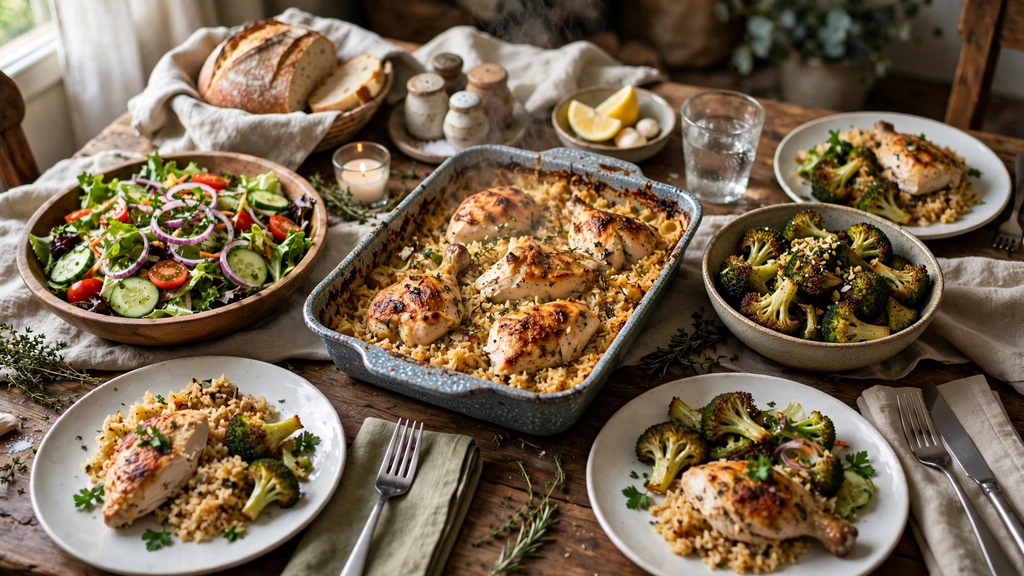
What to Serve with Baked Chicken and Rice
This dish is a complete meal on its own, but a few sides round it out nicely:
- A crisp green salad with a sharp lemon vinaigrette
- Roasted broccoli, asparagus, or green beans
- Steamed or sautéed spinach with garlic
- A simple cucumber and tomato salad
- Warm dinner rolls or garlic bread for scooping up the juices
- A dollop of plain yogurt or tzatziki on the side for tang
Storage, Reheating, and Meal Prep
Refrigerating. Cool leftovers within two hours of cooking, then store in airtight containers for up to 3 to 4 days. Rice can harbor bacteria if left at room temperature too long, so don’t leave the dish sitting out after dinner.
Freezing. Portion the chicken and rice into freezer-safe containers and freeze for up to 3 months. Thaw overnight in the refrigerator.
Reheating. Sprinkle a tablespoon or two of water or broth over the rice, cover, and microwave in 60-second bursts until steaming hot throughout. In the oven, cover with foil and heat at 350°F (175°C) for 15 to 20 minutes. Always reheat leftovers to 165°F (74°C).
Meal prep. Baked chicken and rice is ideal for weekly meal prep. Make a double batch in two dishes, divide into five or six containers with a side of steamed vegetables, and you have lunches sorted. For the best texture, store the lemon wedges and fresh herbs separately and add them just before eating.
Make-ahead tip. You can mix the spice rub and dice the onion and garlic the night before. Store the chicken seasoned in the refrigerator, then assemble and bake the next day. Add the hot broth only right before baking.
A Little History: Why Chicken and Rice Is Everywhere
Chicken and rice isn’t one dish so much as a global family of dishes. Spanish arroz con pollo, Persian morgh polo, Indian chicken biryani, Caribbean pelau, Nigerian jollof with chicken, Hainanese chicken rice, and the American Southern chicken and rice casserole all share the same idea: cook rice in the flavorful juices of chicken. Baked chicken and rice is the home-oven cousin of this tradition, and it’s one reason the pairing appears in nearly every cuisine that grows rice. It’s economical, filling, and endlessly adaptable.
Nutrition Overview
Estimates per serving, based on 6 servings made with bone-in, skin-on thighs, white rice, and low-sodium broth. Values vary by brand and ingredient choices.
| Nutrient | Approximate amount |
|---|---|
| Calories | 520 kcal |
| Protein | 31 g |
| Carbohydrates | 48 g |
| Fat | 23 g |
| Saturated fat | 7 g |
| Fiber | 2 g |
| Sugar | 2 g |
| Sodium | 640 mg |
Protein. At around 30 grams per serving, this meal delivers a solid share of daily protein needs, supporting muscle repair and fullness.
Carbohydrates. Most of the carbs come from the rice, which provides quick energy. Using brown rice raises fiber and slows digestion.
Fat. Most of the fat comes from the chicken skin and butter. If you want a lighter meal, remove the skin before eating, use skinless thighs, or reduce the butter.
Sodium. Using low-sodium broth lets you control the salt. Regular broth can push the sodium count well above 900 mg per serving.
Easy ways to lighten it up:
- Use skinless thighs or breasts (saves roughly 100 calories per serving)
- Swap white rice for brown rice or cauliflower rice (adjust the liquid)
- Add extra vegetables to increase fiber and volume
- Skip the butter and use all olive oil
Easy ways to boost it: add a side of leafy greens, stir in beans or chickpeas, or finish with a spoonful of Greek yogurt for extra protein.
This overview is a general estimate and not medical advice. If you’re managing a health condition or following a specific diet, use a nutrition calculator with your exact ingredients or ask a registered dietitian.
Frequently Asked Questions
About 55 minutes in total: 40 minutes covered with foil, then 12 to 15 minutes uncovered. Bone-in thighs should reach 175°F (80°C) inside.
No. The rice cooks directly in the dish in hot broth. That’s what makes this recipe so easy and flavorful.
Common causes are a loose foil seal, cold liquid, too little broth, or opening the oven too soon. Add a splash of hot broth, cover tightly, and bake another 10 minutes.
Yes, but they cook faster and dry out easily. Use bone-in breasts and pull them at 165°F (74°C), or cut boneless breasts into thick pieces and add them partway through baking.
Yes. Increase the broth to about 3¼ cups and bake covered for 65 to 75 minutes. Start the rice alone for the first 30 minutes, then add the chicken.
You can, but the flavor will be noticeably flatter. If you use water, add a bouillon cube or extra seasoning.
You can prep the seasoning and vegetables a day ahead, and you can fully bake it and reheat later. For the best texture, assemble and bake it fresh.
Yes, for up to 3 months in airtight containers. Thaw overnight in the fridge and reheat with a splash of broth.
Final Thoughts
Baked chicken and rice proves that comfort food doesn’t need to be complicated. With a handful of pantry staples, one dish, and a little patience, you get tender chicken, flavorful rice, and almost no cleanup. Master the basic method, then make it your own with the variations above. Whether it’s a busy weeknight dinner, a weekend meal-prep session, or a family favorite you bring to a friend, this is a recipe you’ll return to again and again.